Search results for
They built a boat out of papyrus
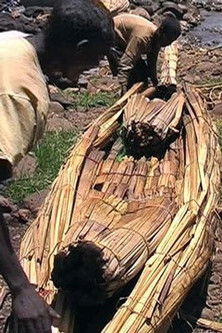
Tankwas
Papyrellas, or papyrus boats, are often represented on the terracottas, paintings and mosaics of ancient Egypt. The papyrus plant, however, disappeared from the Egyptian countryside centuries ago, and one must travel to Ethiopia to see such craft, locally known as tankwas. The papyrus reed grows on the banks of Lake Tana, a lake that lies at 1850 metres above sea level and through which the Blue Nile flows, by more than 4000 km far from the river ' s mouth. The local inhabitants use the long stems of this plant to build their boats. Bundles of dried papyrus, laid end to end with a slight overlap, are lashed to an untrimmed pole of eucalyptus wood that acts as a sort of keel. Its length depends on the end use : from 1 metre for those built for children, up to 12 metres for the largest that are used to transport cargoes of wood, fish or as ferries carrying a dozen passengers from one bank of the Nile to the other.

When the Egyptians Sailed on the Red Sea
Cheryl Ward, American archaeologist and world specialist in ancient navigation, is coordinating the design and construction of the replica of an Egyptian ship from the time of the New Kingdom. Details for building the ship come from a bas-relief from the temple of Deir el-Bahri in Luxor. This inscriptions recounts that a fleet of five ships, supplied by Queen Hatshepsut in the year 1500 BC, succeeded in finding the marvelous and far-off land of Punt, from whence they brought back the most extraordinary riches. Once the reconstruction is completed, the team intends to sail in the wake of Hatshepsut’s fleet aboard their reconstructed vessel to find the mythical land of Punt and prove that the Egyptians were a seafaring people. This film proposes a unique explanation of this historic voyage, following the true adventure of historians, Egyptologists and archaeologists, and sheds new light on the reign of Queen Hatshepsut.
Rate This Search
How well did these results match your search?