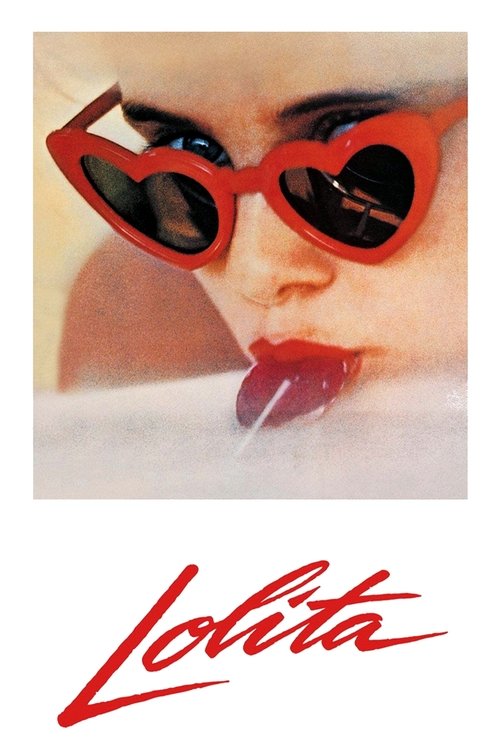
Lolita (1962)
Humbert Humbert is a middle-aged British novelist who is both appalled by and attracted to the vulgarity of American culture. When he comes to stay at the boarding house run by Charlotte Haze, he soon becomes obsessed with Lolita, the woman's teenaged daughter.
Details
Budget
$2,000,000
Rating
7/10 (2097 votes)
Status
Released
Production Companies
Seven Arts Productions, Harris Kubrick Pictures, A.A. Productions, Ltd., Anya Pictures, Transworld Pictures
About Lolita
Stanley Kubrick's 1962 film "Lolita" adapts Vladimir Nabokov's novel, exploring the obsession of a middle-aged British literature professor, Humbert Humbert, with a teenage girl, Dolores "Lolita" Haze. The film navigates Humbert's infatuation and the complexities that arise from it after he marries Lolita's mother, Charlotte Haze. Despite the controversial subject matter, the film frames the narrative as a dark comedy and psychological drama.
The movie faced significant censorship challenges during its production and release, which influenced how the more explicit aspects of the novel were depicted. The physical intimacy between the adult and minor character is largely implied rather than shown directly. "Lolita" is recognized for its cast, including James Mason as Humbert, Sue Lyon as Lolita, and Shelley Winters as Charlotte Haze. Peter Sellers also features in a prominent role as Clare Quilty, a character who plays a more expanded role in the film adaptation compared to the book. Critics have often discussed the film's tone, its performances, and how it translates the provocative source material to the screen within the constraints of its era.
Why you might be searching for Lolita
People search for "Lolita" due to its notorious subject matter involving an older man's obsession with a teenage girl, its status as a classic film by Stanley Kubrick, and its origin as a controversial novel by Vladimir Nabokov. The casting of James Mason, Sue Lyon, and Peter Sellers, particularly Lyon's young age during filming, also draws interest.
What reviewers are saying
One reviewer noted that the film portrays an attractive 14-year-old girl who is aware of her influence over men and uses it.
Read the full reviewA reviewer pointed out that due to the film's controversial nature, physical intimacy between the adult and minor character is only hinted at, with Sue Lyon, who turned 15 during shooting, delivering a surprisingly good performance for her age without much exploitation of her beauty beyond an early bikini scene.
Read the full reviewA review mentioned that the character of Quilty, while having a smaller role in the book, is expanded in the film and is meant to reflect Humbert's darker desires; however, the reviewer felt Peter Sellers' performance was too over-the-top, detracting from the movie, despite Sellers' charisma.
Read the full reviewFrequently Asked Questions
Common questions about finding and identifying movies
You can stream the 1962 film Lolita on Plex Player and Tubi TV for free with ads. It's also available for rent or purchase on platforms like Apple TV Store, Fandango At Home, and Amazon Video. Additionally, you can find it on DVD and Blu-ray.
No, the 1962 film Lolita is based on the 1955 novel by Vladimir Nabokov. It is a work of fiction.
At the end of the 1962 film Lolita, Humbert Humbert receives a letter from Dolores, who is now pregnant and married, asking for money. He visits her and learns that Clare Quilty, a playwright who had been crossing their paths, was the one who took her from the hospital. Dolores reveals she had an affair with Quilty and left with him under the promise of a Hollywood contract, but he instead secluded her and demanded she participate in child pornography, which she refused. Humbert, after giving Dolores money, confronts and shoots Quilty. A postscript mentions Humbert later died of coronary thrombosis while awaiting trial for Quilty's murder.
The 1962 film Lolita has received critical acclaim, holding an 89% score on Rotten Tomatoes with a consensus praising its "sly comedic touch and a sterling performance by James Mason." While controversial due to its subject matter, critics have re-evaluated it positively over time, with some filmmakers like David Lynch and Sofia Coppola citing it as a favorite Kubrick film.