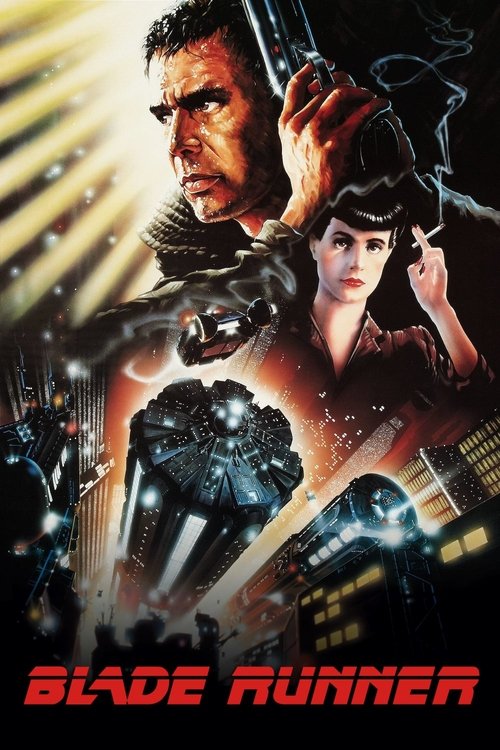
Blade Runner (1982)
In the smog-choked dystopian Los Angeles of 2019, blade runner Rick Deckard is called out of retirement to terminate a quartet of replicants who have escaped to Earth seeking their creator for a way to extend their short life spans.
Details
Budget
$28,000,000
Rating
8/10 (14001 votes)
Status
Released
Production Companies
Shaw Brothers, The Ladd Company, Warner Bros. Pictures
About Blade Runner
Ridley Scott's 1982 film "Blade Runner" establishes a dystopian Los Angeles in 2019, where engineered humanoids known as replicants are hunted down by "blade runners." The narrative centers on Rick Deckard, who is tasked with retiring four replicants seeking to extend their limited lifespans. The movie explores themes of humanity, artificial intelligence, and genetics within its futuristic, neo-noir setting. Its atmosphere is characterized by grim visuals and a suspenseful plot.
The film, adapted from Philip K. Dick's novel "Do Androids Dream of Electric Sheep?", was not an immediate commercial success but gained significant acclaim over time. Its blend of science fiction and thriller elements, alongside its exploration of what it means to be human, positioned it as a distinctive entry in the genre. Harrison Ford's performance as Deckard, combined with Rutger Hauer's portrayal of the replicant leader, contributes to the film's enduring impact.
"Blade Runner" is recognized for its visual style, featuring flying cars and a detailed, cyberpunk urban landscape. It delves into questions about identity and existence, particularly for the replicants, who grapple with their manufactured nature. The film's lasting influence is evident in its sustained critical re-evaluation and its status as a cult classic.
Why you might be searching for Blade Runner
People often search for "Blade Runner" due to its iconic dystopian setting, the philosophical questions it raises about humanity and artificial intelligence, and memorable elements like flying cars, unicorns, and origami. Its complex narrative, which includes a character who believes they are human but eventually realizes they are a robot, is also a frequent point of interest. The film's influence on the cyberpunk genre and its unique visual style contribute to its enduring searchability.
What reviewers are saying
One reviewer notes that the film's popularity grew significantly over time, initially being considered a flop despite its eventual recognition as a masterpiece.
Read the full reviewA viewer found the story confusing, particularly the "Final Cut's" different ending, and needed to research its meaning online to fully appreciate it, though they praised the visuals.
Read the full reviewA reviewer humorously counters arguments against the film's cult status by pointing to Rutger Hauer's performance on a rooftop as a sufficient reason for its appeal.
Read the full reviewA viewer who watched the "Final Cut" found the film plodding at times, but commended its visionary aspects, bleak atmosphere, and the poignant "Time to Die" speech by Rutger Hauer.
Read the full reviewFrequently Asked Questions
Common questions about finding and identifying movies
You can stream "Blade Runner" (1982) on Netflix, where both the Theatrical and Director's Cut, as well as "Blade Runner: The Final Cut," are available. It can also be bought or rented through services like Amazon Video and Fandango At Home. Additionally, the movie is available for purchase on DVD and Blu-ray.
No, "Blade Runner" is not based on a true story. It is a science fiction film set in a dystopian future where a "Blade Runner" hunts down rogue androids.
The ending of "Blade Runner" involves Deckard, a Blade Runner, falling in love with Rachael, a replicant, whom he is assigned to eliminate. He is tasked with hunting four escaped replicants, and the film explores complex moral questions about humanity and identity. The critical consensus points to the film's visually stunning nature and its exploration of these themes, leaving viewers to ponder the implications of its story.
"Blade Runner" is considered a visually remarkable and influential sci-fi masterpiece, known for its complex moral questions and atmospheric neo-noir style. Despite a slow pace for some viewers, its powerful visuals and acting make it a film that continues to offer new insights with each rewatch, earning it an 89% rating on Rotten Tomatoes.