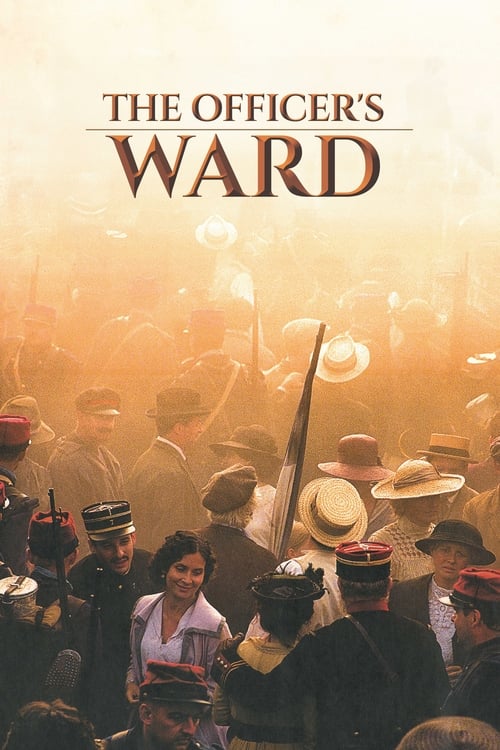
The Officers' Ward (2001)
The first days of WWI. Adrien, a young and handsome lieutenant, is wounded by a piece of shrapnel. He will spend the entire wartime at the Val-de-Grâce Hospital, in Paris. Five long years, and his life will change forever...
Details
Budget
$0
Rating
7/10 (93 votes)
Status
Released
Production Companies
ARP Sélection, France 2 Cinéma
About The Officers' Ward
The 2001 French film "The Officers' Ward" is a drama, romance, and war film set during the initial days of World War I. It follows Lieutenant Adrien, a young officer who sustains a shrapnel wound. The narrative centers on his five years of recovery at the Val-de-Grâce Hospital in Paris and how this experience permanently alters his life.
The film has a runtime of 135 minutes and has received a vote average of 7 out of 10 from 93 votes on TMDB, and a 7.4 rating from 1,764 votes on IMDb. It explores themes typical of its genres, focusing on the personal impact of war beyond the battlefield.
Why you might be searching for The Officers' Ward
People search for "The Officers' Ward" due to its setting in World War I, its focus on the long-term recovery of a wounded officer, and the dramatic and romantic elements that unfold within a military hospital environment.
Frequently Asked Questions
Common questions about finding and identifying movies
Yes, "The Officers' Ward" is based on a novel by Marc Dugain, which was inspired by the real-life experiences of one of the author's ancestors during World War I. The film depicts the struggles of French soldiers who suffered severe facial disfigurement in the war.
The film "The Officers' Ward" concludes shortly after World War I, focusing on Adrien's release from the hospital after four and a half years of reconstructive surgery. The final scene shows Adrien having a chance encounter with his future wife in post-war Paris. This differs from the novel, which follows the characters through World War II and beyond.
Critics generally consider "The Officers' Ward" a worthwhile watch, praising its sensitive portrayal of disfigured WWI soldiers and the psychological impact of their injuries. Reviewers highlighted the film's ability to capture the "insanity of a time when science had perfected mechanized warfare, but had yet to work out how to rebuild the ripped and shredded bodies of the men sent out to fight." It received nine nominations at the 27th César Awards and won for Best Supporting Actor and Best Cinematography.