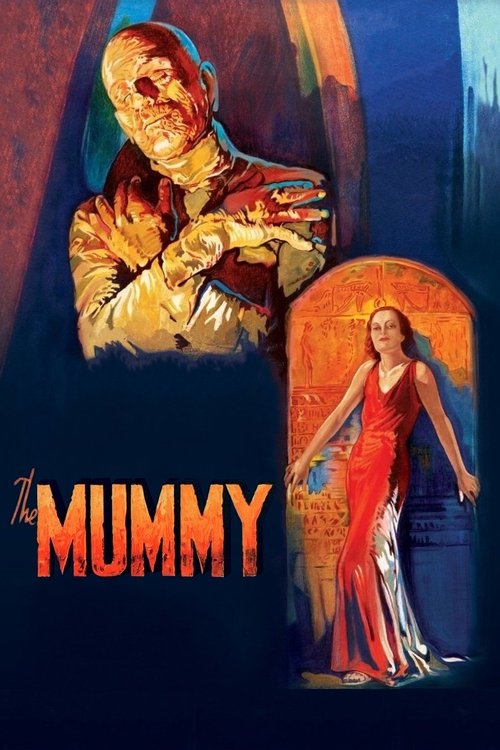
The Mummy (1932)
An ancient Egyptian priest named Imhotep is revived when an archaeological expedition finds his mummy and one of the archaeologists accidentally reads an ancient life-giving spell. Imhotep escapes from the field site and searches for the reincarnation of the soul of his lover.
Details
Budget
$196,000
Rating
7/10 (626 votes)
Status
Released
Production Companies
Universal Pictures
About The Mummy
Released in 1932, "The Mummy" is a horror and fantasy film that explores themes of ancient curses, reincarnation, and eternal love. The story centers on Imhotep, an ancient Egyptian priest resurrected after an archaeological expedition discovers his tomb and an ancient spell. Once awakened, Imhotep seeks to reunite with the reincarnation of his lost love, believing she now exists in a modern woman.
Boris Karloff's portrayal of Imhotep departs from the traditional bandaged monster. Instead, he presents a more human and calculated menace. The film's black and white cinematography contributes to its atmospheric tension, using shadows to create an eerie mood without relying on jump scares. Despite its age and some dated elements, the film holds significance within the history of horror cinema, particularly as part of Universal's monster movie lineup.
"The Mummy" has a runtime of 73 minutes and maintains a consistent average rating across different platforms. The narrative touches on elements like excavation, resurrection, and the concept of a condemned man, all set against an Egyptian backdrop. Its influence can be seen in subsequent films that tackle similar mythological themes.
Why you might be searching for The Mummy
People are often searching for this film due to its connection to classic monster movies and the specific visual of a mummy brought back to life. Searches might include references to the black and white aesthetic, the unique depiction of the mummy character by Boris Karloff, or general themes of ancient curses and reincarnation.
What reviewers are saying
One reviewer found this film more engaging than other contemporary monster movies like "Frankenstein" and "Dracula," appreciating its story and memorability despite some editing issues.
Read the full reviewA review notes the film's slow pace and somewhat average acting outside of Karloff, but highlights its haunting atmosphere, eerie sequences, and effective use of shadowed photography over shock tactics.
Read the full reviewA critic points out Karloff's distinct portrayal of Imhotep as a more human and calculating villain, which they found more menacing than a typical lurching monster, even if the supporting cast was less compelling.
Read the full reviewFrequently Asked Questions
Common questions about finding and identifying movies
You can stream "The Mummy" (1932) on Peacock Premium and Peacock Premium Plus. It is also available to buy or rent on Amazon Video, Apple TV, and Fandango at Home.
While the 1932 film "The Mummy" is not based on a true story, it draws inspiration from historical events and Egyptian mythology. The film's creation was influenced by the 1922 discovery of Tutankhamun's tomb and the associated "curse of the pharaohs." Additionally, the concept of a buried-alive punishment and the fictional "Scroll of Thoth" have loose ties to real ancient Egyptian practices and beliefs.
In the 1932 film "The Mummy," Imhotep believes Helen Grosvenor is the reincarnation of his deceased lover, Princess Ankh-es-en-Amon, and attempts to kill, mummify, and then resurrect her to be his immortal bride. Frank and Dr. Muller intervene, and Helen, now possessed by Ankh-es-en-Amon's spirit, appeals to the goddess Isis. A flash from an Isis statue sets the Scroll of Thoth on fire, which breaks the spell giving Imhotep immortality, causing him to die and turn to dust. Helen awakens as herself after the princess's spirit leaves her body.
Critics generally consider the 1932 film "The Mummy" a worthwhile watch, with Rotten Tomatoes reporting 90% positive reviews. It is praised for its mood and atmosphere, setting a template for future mummy-themed films.