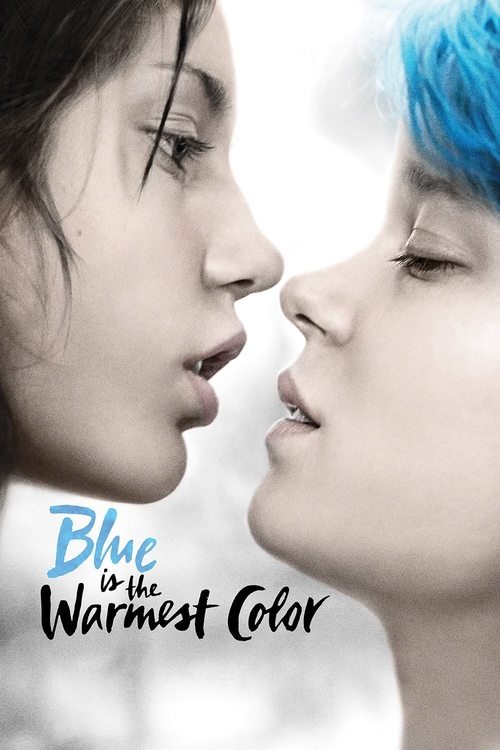
Blue Is the Warmest Color (2013)
Adèle's life is changed when she meets Emma, a young woman with blue hair, who will allow her to discover desire, to assert herself as a woman and as an adult. In front of others, Adele grows, seeks herself, loses herself, finds herself.
Details
Budget
$4,300,000
Rating
7/10 (4642 votes)
Status
Released
Production Companies
Wild Bunch, SCOPE Pictures, Quat'sous Films, France 2 Cinéma, RTBF, Alcatraz Films, Vértigo Films
About Blue Is the Warmest Color
Set against the backdrop of Lille, France, "Blue Is the Warmest Color" follows Adèle's journey of self-discovery from her high school days into early adulthood. The film explores her evolving identity as she navigates her first serious lesbian relationship, a pivotal experience that shapes her understanding of desire and love. This three-hour drama delves into the complexities of an age-gap romance and the broader themes of social class and homophobia.
Adapted from a graphic novel, the movie focuses on the intimate details of Adèle's life, tracing her emotional growth. Her connection with Emma, a blue-haired artist, becomes the central force in her sexual awakening and self-exploration. The narrative emphasizes the often-tumultuous nature of a first love, capturing both its intense joys and profound heartbreaks.
With a runtime of 180 minutes, the film takes a deliberate pace to build its characterizations. It has garnered significant critical attention, evident in its strong ratings across platforms like IMDb (7.6), Rotten Tomatoes (88%), and Metacritic (90/100), reflecting its impact as a drama centered on love, coming of age, and personal assertion.
Why you might be searching for Blue Is the Warmest Color
People are often searching for "Blue Is the Warmest Color" due to its explicit content, particularly its lengthy and graphic sex scenes. The film is also known for its central lesbian relationship and the intense performances of its lead actresses. Its controversial reception and the detailed portrayal of a young woman's sexual awakening contribute to its search interest.
What reviewers are saying
One reviewer noted that despite the film's explicit reputation, it largely focuses on Adele's internal experience, drawing the viewer into her thought process and making her romance with Emma more impactful, even through its painful conclusion.
Read the full reviewA review described the film's unhurried pacing as a way to carefully develop the characters of Adele and Emma, along with their families and the boys who influence their maturation, even if some parts felt lengthy or repetitive.
Read the full reviewA viewer became fixated on the actress Adele Exarchopoulos after seeing the film, even going so far as to order a custom poster of her.
Read the full reviewOne critic observed Adele as an outsider at school, who finds the 'boy thing' uninteresting until she is captivated by the eccentric, blue-haired Emma, leading to an intense and sometimes obsessive relationship.
Read the full reviewFrequently Asked Questions
Common questions about finding and identifying movies
You can stream "Blue Is the Warmest Color" on [Netflix](https://www.netflix.com/mh/title/70275600), [Apple TV](https://tv.apple.com/us/movie/blue-is-the-warmest-color/umc.cmc.120heo114onnhkb4u2sbo143i), and [Sundance Now](https://www.sundancenow.com/films/watch/blue-is-the-warmest-color/4bbe7a6d8edd0295).
"Blue Is the Warmest Color" is an adaptation of a graphic novel by Julie Maroh, not a true story. The film tells the story of a same-sex first love in intricate detail.
The film ends with Adèle and Emma's relationship falling apart, a common theme in stories of first love where betrayal often plays a role. The ending emphasizes the melancholy aspect of love and desire, suggesting they aren't always enough to sustain a relationship, and that people exist beyond their intimate connections. While the movie explores the intense passion and heartbreak of their relationship, it also leaves some aspects of Adèle's life, like her family interactions after moving in with Emma, unexplored, which some viewers might find odd given the film's length.
"Blue Is the Warmest Color" has received an 88% approval rating on Rotten Tomatoes, with critics praising its raw, honest, and powerfully acted drama. Many consider it an emotionally absorbing film, though some critics and viewers have expressed discomfort with the director's portrayal of the relationship.