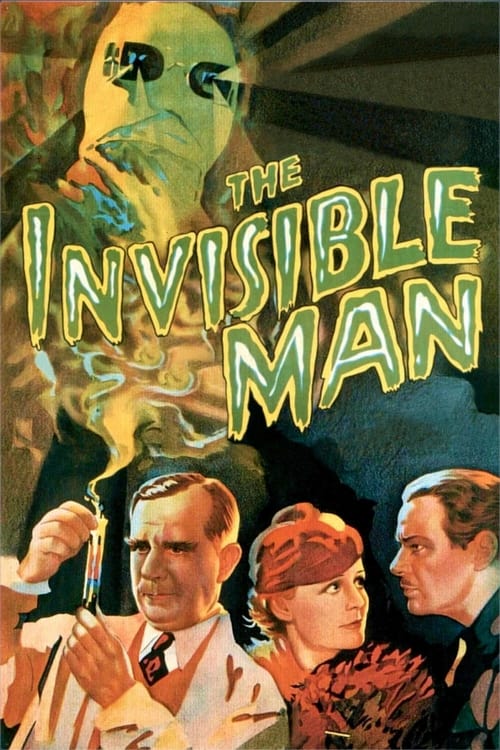
The Invisible Man (1933)
After experimenting on himself and becoming invisible, scientist Jack Griffin, now aggressive due to the drug's effects, seeks a way to reverse the experiment at any cost.
Details
Budget
$328,000
Rating
8/10 (863 votes)
Status
Released
Production Companies
Universal Pictures
About The Invisible Man
James Whale's 1933 film "The Invisible Man" delves into the consequences of scientific ambition, drawing from H.G. Wells's 1897 novel. The story centers on Dr. Jack Griffin, a chemist who achieves invisibility through self-experimentation. However, the chemical process also induces aggression and instability, transforming him into a malevolent force. The narrative follows Griffin as he attempts to find a way to reverse his condition, while simultaneously causing chaos and committing acts of violence.
The film is a blend of horror and science fiction, exploring themes of scientific ethics and the corrupting nature of unchecked power. Its early 20th-century setting and black-and-white cinematography contribute to a distinct atmospheric quality. The visual effects, particularly for the titular character's invisibility, were notable for their time and remain effective in conveying the premise.
"The Invisible Man" is recognized as a significant entry in the Universal Monsters series, demonstrating the studio's early command of genre filmmaking. Its critical reception has been consistently positive, with high ratings from both critics and audiences, underscoring its enduring impact as a classic horror and science fiction picture.
Why you might be searching for The Invisible Man
People search for "The Invisible Man" to find the classic 1933 horror film about a scientist who becomes invisible and descends into madness. The striking visual effects for its era, the performance of Claude Rains, and its place in early cinematic horror history are memorable details.
What reviewers are saying
One reviewer noted that the film effectively merges dark humor, intense science, and genuine malice, which was a remarkable achievement for a 1933 production, especially given the enduring quality of its visual effects.
Read the full reviewA review highlighted the ingenuity of the filmmaking in making the invisible man a tangible presence, suggesting that its practical effects surpass many modern CGI spectacles.
Read the full reviewThis film was praised for its sustained cinematic entertainment, with one critic pointing out that the initial half, focusing on the chemist's invisibility and madness, is particularly engaging.
Read the full reviewFrequently Asked Questions
Common questions about finding and identifying movies
You can stream "The Invisible Man" (1933) on Amazon Prime Video, Peacock Premium, IndieFlix, Amazon Prime Video with Ads, Peacock Premium Plus, and IndieFlix Shorts Amazon Channel. It's also available with ads on Plex Player. Additionally, you can rent or buy it on Amazon Video, Apple TV, and Fandango At Home.
No, the 1933 film "The Invisible Man" is not based on a true story. It is an adaptation of H.G. Wells' science-fiction novel of the same name, published in 1897.
At the end of "The Invisible Man," a snowstorm forces Griffin into a barn where he falls asleep. A farmer alerts the police, who set the barn on fire to force Griffin out. The police follow his visible footprints in the snow and shoot him. Mortally wounded, Griffin is taken to the hospital, where he eventually becomes visible again as he dies.
The 1933 film "The Invisible Man" is considered a classic horror film, known for its groundbreaking visual effects and Claude Rains' performance. Critics have praised its sustained tension, humor, and lasting impact on the genre, with a 95% positive rating on Rotten Tomatoes and "universal acclaim" on Metacritic.